
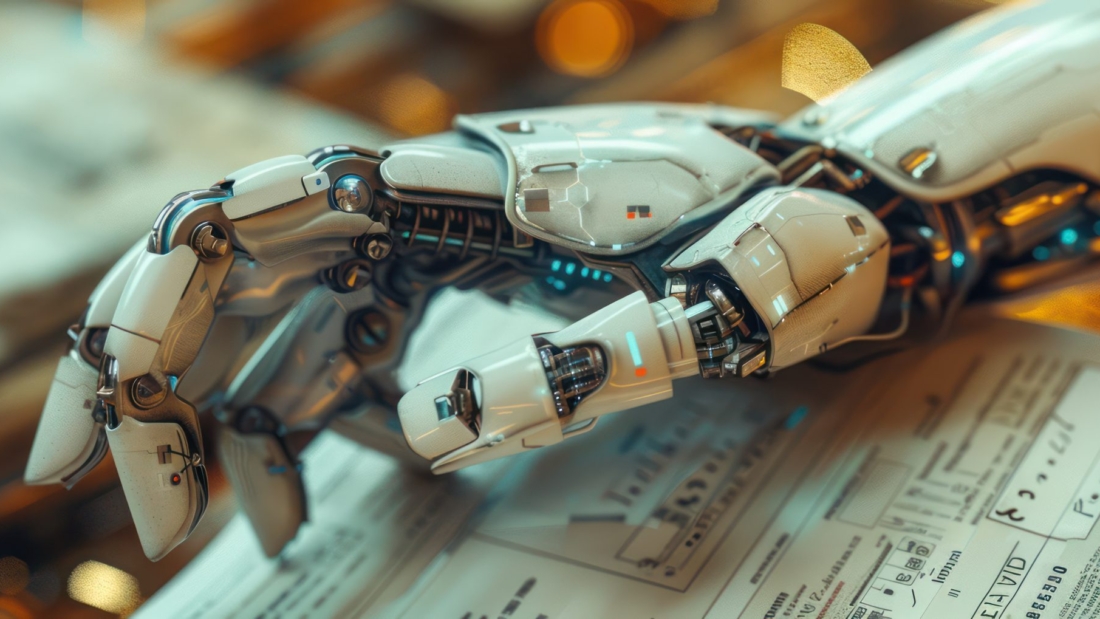
Artificial intelligence is moving beyond screens, software, and digital assistants. By combining large language models (LLMs) with physical machines, researchers and technology developers are creating a new generation of robots capable of understanding instructions, interpreting their surroundings, and performing a wider range of tasks.
This evolution marks a significant shift from traditional automation. Instead of being restricted to repetitive activities in carefully controlled environments, general-purpose robots are beginning to demonstrate greater adaptability, contextual awareness, and the ability to respond to changing situations.
For the insurance industry, this development creates a dual opportunity. Intelligent robots could help insurers assess risks more accurately, investigate claims more efficiently, and support safer working environments. At the same time, their growing presence in homes, hospitals, workplaces, and public spaces introduces new questions about liability, safety, cybersecurity, and accountability.
The challenge is not simply to understand what these machines can do. It is to anticipate what could happen when they operate in the real world, where conditions are unpredictable and decisions can have significant consequences.
As robotics advances, insurers will need to rethink how risks are identified, evaluated, and managed. Three areas deserve particular attention: property and disaster assessment, workforce safety, and elderly care.
From Task-Specific Machines to General-Purpose Robots
Robots are evolving from programmed tools into adaptable physical assistants.
Traditional industrial robots have proved highly effective at performing repetitive tasks such as assembling components, transporting materials, and handling standardized products. Their precision and reliability make them valuable in environments where movements and conditions can be carefully controlled.
However, these systems often struggle when they encounter unfamiliar objects, unexpected obstacles, or instructions that fall outside their predefined programming.
The combination of advanced AI models, perception systems, and increasingly capable robotic hardware is beginning to change this limitation.
General-purpose robots can use language models to interpret instructions, draw on contextual information, and coordinate actions. Combined with cameras, sensors, navigation systems, and physical controls, these capabilities can help machines interact with their surroundings more flexibly.
Imagine a robotic assistant asked to retrieve a particular object from a crowded room. Rather than following a single fixed sequence, it could interpret the request, identify the object, navigate around obstacles, and adjust its actions as conditions change.
Similar capabilities could support mobility assistance, warehouse operations, property inspections, and emergency response.
Yet greater flexibility does not automatically mean greater reliability. A robot may misunderstand an instruction, misinterpret an object, overlook a hazard, or behave unpredictably when confronted with an unfamiliar situation.
For insurers, this distinction is fundamental. As machines become capable of performing more complex tasks, the range of possible losses—and the number of parties potentially involved in those losses—may expand as well.
1. Property Risk and Disaster Response: Better Insights, New Uncertainties
Robots could transform how insurers observe, investigate, and understand risk.
Assessing damage after a fire, flood, storm, or structural failure can be expensive, time-consuming, and dangerous. Human assessors may need to enter unstable buildings, inspect difficult-to-reach areas, or work in environments where conditions remain hazardous.
Robotics offers a different approach.
Equipped with cameras, sensors, and AI-powered analysis, robots could collect detailed information from damaged properties, construction sites, industrial facilities, and disaster zones. They could document visible damage, identify potential safety concerns, and provide information that helps claims professionals evaluate losses.
Exoskeletons and other assistive technologies may also help workers perform physically demanding inspections while reducing certain occupational risks.
From Data Collection to Contextual Understanding
The potential goes beyond capturing images or measuring physical conditions.
AI-enabled systems may help identify patterns across different observations, compare damage with historical cases, and flag details that warrant further investigation. Over time, these insights could support improved risk modeling, more informed underwriting, and better-targeted loss prevention.
However, the conclusions produced by intelligent systems must be treated carefully.
AI models can identify correlations without understanding their true causes. They may also inherit biases from training data, overlook unusual circumstances, or generate plausible but incorrect interpretations of what they observe.
A robot inspecting a damaged building, for example, might identify a structural failure but incorrectly attribute its cause. If that assessment influences a claim decision or future underwriting model, an initial error could have consequences well beyond the original inspection.
Another concern is that AI systems can sometimes acquire unexpected behavioral patterns from data, including patterns that are difficult to identify through conventional testing. Research into indirect or subliminal learning illustrates why apparently harmless information may influence a model in ways that are not immediately obvious.
These possibilities reinforce the importance of independent verification, careful data management, and ongoing model evaluation.
What Insurers Should Consider
As robotic inspections become more common, insurers should prepare to evaluate both the opportunities and the limitations of the resulting data.
Key priorities include:
- Reliable evidence: Establish standards for validating images, sensor readings, and AI-generated damage assessments.
- Clear accountability: Define who is responsible when a robotic system produces inaccurate or incomplete information.
- Human verification: Ensure consequential claim and underwriting decisions can be reviewed by qualified professionals.
- Responsible data use: Prevent unverified findings from entering risk models without appropriate validation.
- Continuous monitoring: Evaluate system performance across different environments, operating conditions, and types of loss.
Robotics could make risk assessment faster and more comprehensive, but its value will depend on the quality of the evidence and the judgment applied to it.
2. Workforce Transformation: Rethinking Workers’ Compensation
When machines work alongside people, workplace risk takes on a new dimension.
Robots are increasingly moving beyond isolated production lines into warehouses, healthcare facilities, construction sites, and other environments shared with human workers.
These machines may help reduce physical strain, identify hazardous conditions, transport heavy materials, and perform dangerous tasks. In principle, such capabilities could prevent certain workplace injuries and improve safety management.
Yet closer human-robot interaction also introduces new risks.
A robot might misinterpret a movement, fail to recognize a person entering its operating area, respond incorrectly to an instruction, or experience a software or sensor failure. In environments where people and machines work in close proximity, even a brief malfunction could have serious consequences.
The challenge becomes more complex when a system uses AI to interpret circumstances and determine its next action rather than following a completely predetermined sequence.
Who Is Responsible When Something Goes Wrong?
Suppose an AI-enabled robot injures an employee while moving materials through a warehouse. The incident might involve a mechanical defect, an inaccurate perception model, inadequate safety procedures, poor maintenance, or an unsuitable deployment environment.
Determining responsibility may require examining several contributing factors.
Potentially relevant parties could include the employer, equipment manufacturer, software developer, system integrator, maintenance provider, or another organization responsible for deployment and supervision. The allocation of liability would depend on the facts, applicable law, contractual arrangements, and relevant insurance terms.
This complexity could influence workers’ compensation, employers’ liability, product liability, commercial general liability, and specialized technology-related coverage.
It may also create demand for new risk assessment methods that consider the interaction between physical equipment, software, data, and human behavior.
From Injury Response to Predictive Safety
Robotic systems could also help insurers and employers move toward more proactive workplace risk management.
Sensors and monitoring systems may identify unsafe operating conditions, detect deviations from established procedures, or provide early warnings about equipment performance.
When combined with incident records and other relevant information, these capabilities could help organizations identify recurring hazards and prioritize preventive measures.
However, monitoring itself introduces considerations involving privacy, data ownership, employee consent, and the appropriate use of collected information.
Insurers will need to understand not only whether a company uses robotics, but also how those systems are designed, supervised, maintained, and integrated into workplace safety procedures.
The broader lesson is clear: as automation changes the nature of work, insurance models must evolve alongside the risks they are intended to address.
3. Aging Populations and Long-Term Care: Assistance With Accountability
Robotics could expand care capabilities, but human well-being must remain the priority.
Longer life expectancy and changing demographic patterns are increasing the need for accessible healthcare, daily assistance, and long-term support. At the same time, many care systems face staffing constraints and growing pressure to deliver services efficiently.
Robotics may help address some of these challenges.
Assistive machines could support mobility, help with routine household activities, transport supplies, remind individuals about scheduled tasks, and assist care professionals with physically demanding work.
In suitable environments, these capabilities may help people maintain greater independence while allowing caregivers to focus more attention on personal interaction and complex care needs.
AI-enabled systems could also help users communicate their needs more naturally, making certain assistive technologies easier to operate.
The Risks Behind the Promise
Care environments are particularly sensitive because the people using these technologies may be vulnerable to physical harm or may have difficulty recognizing and responding to a malfunction.
A robotic mobility aid could collide with an obstacle. An assistive device could misinterpret a movement. A care robot might fail to recognize that a person has fallen or needs immediate help.
These scenarios raise important questions about product safety, supervision, professional responsibility, and the limits of automated decision-making.
There are also nonphysical considerations. Excessive reliance on automated systems could reduce meaningful human interaction, while sensitive health and behavioral data may create privacy and cybersecurity risks.
Technology should therefore complement appropriate human care rather than become a substitute for essential judgment, compassion, or supervision.
Implications for Insurance
As robotics becomes more common in healthcare and long-term care, insurers may need to reconsider how they evaluate risks across several areas:
- Product liability: Potential injuries associated with equipment design, manufacturing, or software performance.
- Professional and organizational liability: Questions concerning supervision, deployment, and the standard of care.
- Cyber insurance: Exposure arising from compromised devices, unauthorized access, or disrupted systems.
- Property and equipment coverage: Damage to robotic systems and the facilities in which they operate.
- Specialized risk assessment: New methods for evaluating the safety and reliability of technologies used by vulnerable populations.
The objective is not to discourage innovation. It is to ensure that the benefits of assistive robotics are supported by appropriate safeguards, realistic risk assessments, and clear accountability.
4. Cybersecurity and Responsible AI: The Foundations of Trust
A robot is both a physical machine and a connected digital system.
As robots become more intelligent and interconnected, their risk profile extends beyond mechanical performance. They may depend on cloud services, software updates, remote monitoring, external data sources, and communication networks.
A cybersecurity incident could therefore affect more than information confidentiality. Depending on the system, it might disrupt essential operations, expose sensitive data, or interfere with a machine’s ability to operate safely.
This creates a need for cybersecurity strategies that address both digital and physical consequences.
Secure the Entire Robotic Lifecycle
Insurers and businesses deploying robotic systems should consider security from procurement and design through implementation, maintenance, and retirement.
Important safeguards include secure authentication, restricted access, encrypted communications where appropriate, controlled software updates, continuous monitoring, and incident response procedures.
Organizations should also understand their suppliers’ security practices and determine how vulnerabilities will be reported, investigated, and resolved.
Resilience matters just as much as prevention. Systems should have appropriate fail-safe mechanisms and procedures for safely suspending operations when their reliability or security is in doubt.
Make Responsible AI Part of Operational Governance
AI-powered robots can create difficult questions about explainability, fairness, accountability, and human control.
Organizations need to understand what their systems are permitted to do, which decisions require human approval, and how unusual behavior will be detected and addressed.
Responsible deployment should include:
- Transparency: Document the system’s capabilities, limitations, and intended use.
- Human oversight: Establish intervention mechanisms for consequential or uncertain situations.
- Testing and validation: Assess performance under realistic and challenging operating conditions.
- Data governance: Protect sensitive information and evaluate the quality and appropriateness of data used by AI systems.
- Clear accountability: Assign responsibility for system maintenance, monitoring, incident handling, and operational decisions.
Governance should not be treated as a final compliance exercise. It must be part of how robotic systems are selected, designed, deployed, and continuously evaluated.
Trust depends on demonstrating that these systems can operate safely and that organizations are prepared to respond when they do not.
5. Preparing Insurance for a Robotic Future
The opportunity is not just to insure new technology, but to understand how it changes risk.
The expansion of general-purpose robotics could influence nearly every major area of insurance, from property and commercial liability to workers’ compensation, healthcare, cyber risk, and specialized technology coverage.
As robotic systems take on more complex responsibilities, traditional distinctions between physical equipment, software, and human decision-making may become less straightforward.
Insurers will need to understand how these elements interact and how their combined behavior affects the likelihood and severity of potential losses.
Several strategic priorities can help organizations prepare.
Develop new risk assessment frameworks. Evaluate the full system, including hardware, AI models, data sources, operating environments, maintenance, and human supervision.
Strengthen underwriting expertise. Build the knowledge needed to assess robotic applications across different industries and distinguish between technologies with very different levels of autonomy and exposure.
Improve claims investigation. Establish methods for collecting and validating digital logs, sensor records, system histories, and other evidence that may help explain an incident.
Review coverage and liability assumptions. Identify where existing policy language, exclusions, definitions, or liability frameworks may require closer examination as new use cases emerge.
Collaborate across the ecosystem. Work with technology developers, manufacturers, businesses, risk engineers, and legal specialists to understand emerging hazards and develop appropriate safeguards.
Use real-world data responsibly. Learn from operational experience without assuming that historical patterns will always predict how new systems behave.
These actions can help insurers move from reacting to unfamiliar incidents toward developing a more informed, forward-looking approach to robotic risk.
Final Thoughts: Innovation Must Move at the Pace of Responsibility
The convergence of AI and robotics is opening the door to a new generation of machines capable of interacting with the physical world in increasingly sophisticated ways.
For insurers, the possibilities are significant. Robotic systems could improve property inspections, support disaster response, reduce certain workplace hazards, assist care professionals, and generate valuable insights for risk management.
But every new capability introduces questions that must be addressed before the technology can be trusted at scale. Who is accountable when a machine makes a mistake? How can insurers distinguish reliable evidence from flawed AI-generated conclusions? What safeguards are necessary when robots operate around employees, patients, and the public?
These are not reasons to resist technological progress. They are reasons to approach it with discipline.
The insurers best prepared for this transition will combine technological curiosity with rigorous risk assessment, stronger cybersecurity, responsible AI governance, and a willingness to rethink established insurance models.
The future of robotics in insurance will depend not only on what machines can do, but on how responsibly people design, deploy, supervise, and insure them.
By preparing for both the opportunities and the uncertainties, insurers can help make the next era of intelligent machines safer, more resilient, and more valuable for businesses and society.